For senior leadership teams in Welsh secondary schools
One page each half‑term to help your senior team decide where to act, with the evidence to back it.
Join the 2026–27 pilotTry the demoSee an example summary
Built in Swansea by a secondary teacher, for Welsh schools. Free for pilot schools in 2026–27.
Find your school
Check your school is covered, then apply for a pilot place.
Quick links
The pages school leaders look at first
The real thing
This is what your senior team sees
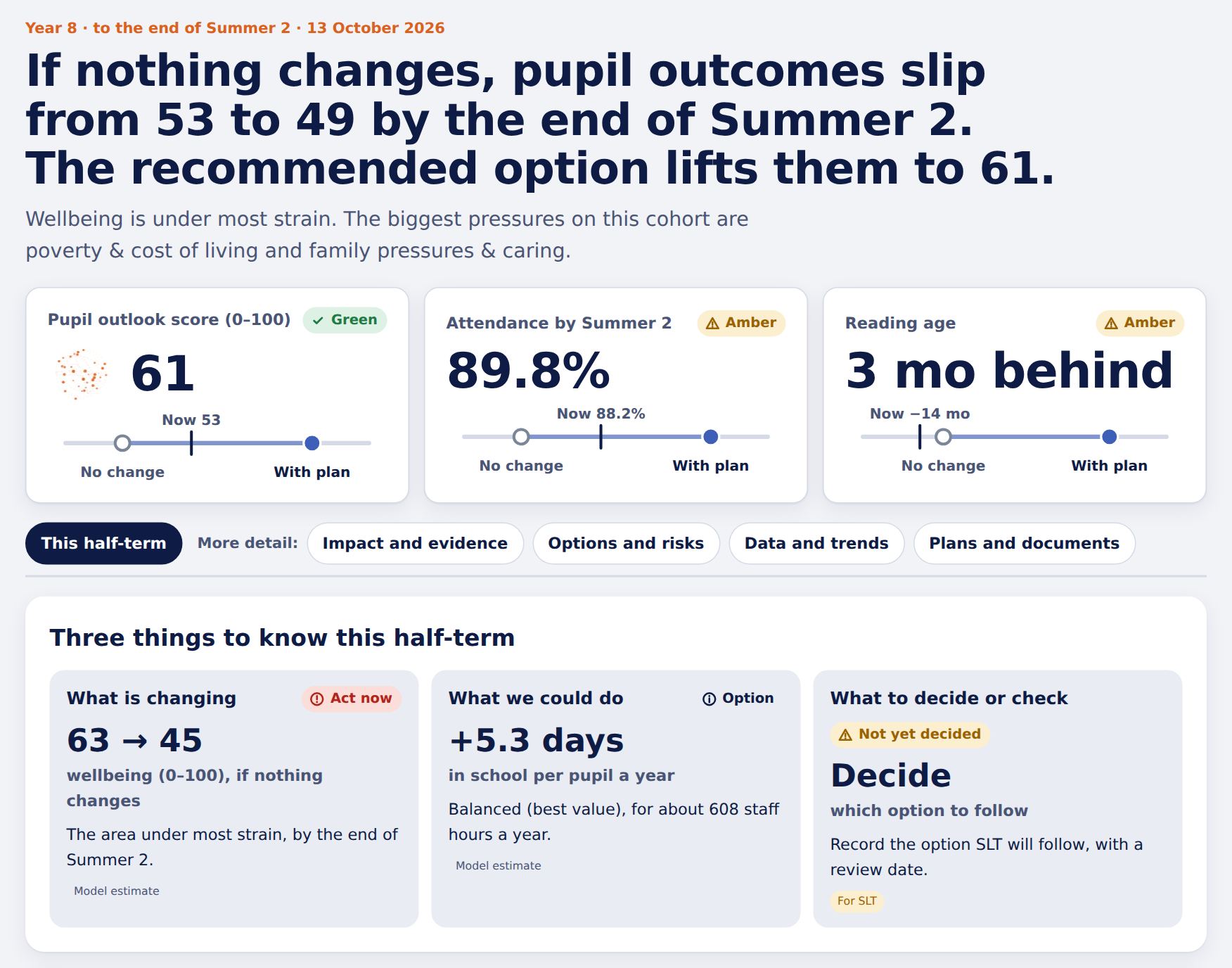
One page for each year group, each half-term. These are real screens from the demo, with made-up figures for an example school.
- 1
Where the year group is heading
One sentence on what happens if nothing changes, and what the recommended option could do. Each figure shows now, no change and with the plan on one bar.
- 2
Three things to know
What is changing, what you could do, and what to decide. Each one leads with a number and says how sure it is.
- 3
Every figure is labelled
Your data, published research or a model estimate, so your team knows how much weight to give each one.
Try it with your own figures
What one point of attendance means for your year group
Percentages are hard to picture in a meeting. Pupil Outlook turns them into days and pupils. Try it here: nothing you type leaves this page.
Simple arithmetic on a 190-day school year (380 sessions). It is not a forecast.
How it fits your year
A half-term with Pupil Outlook
Built around the meeting you already have. Each step below is the real screen.
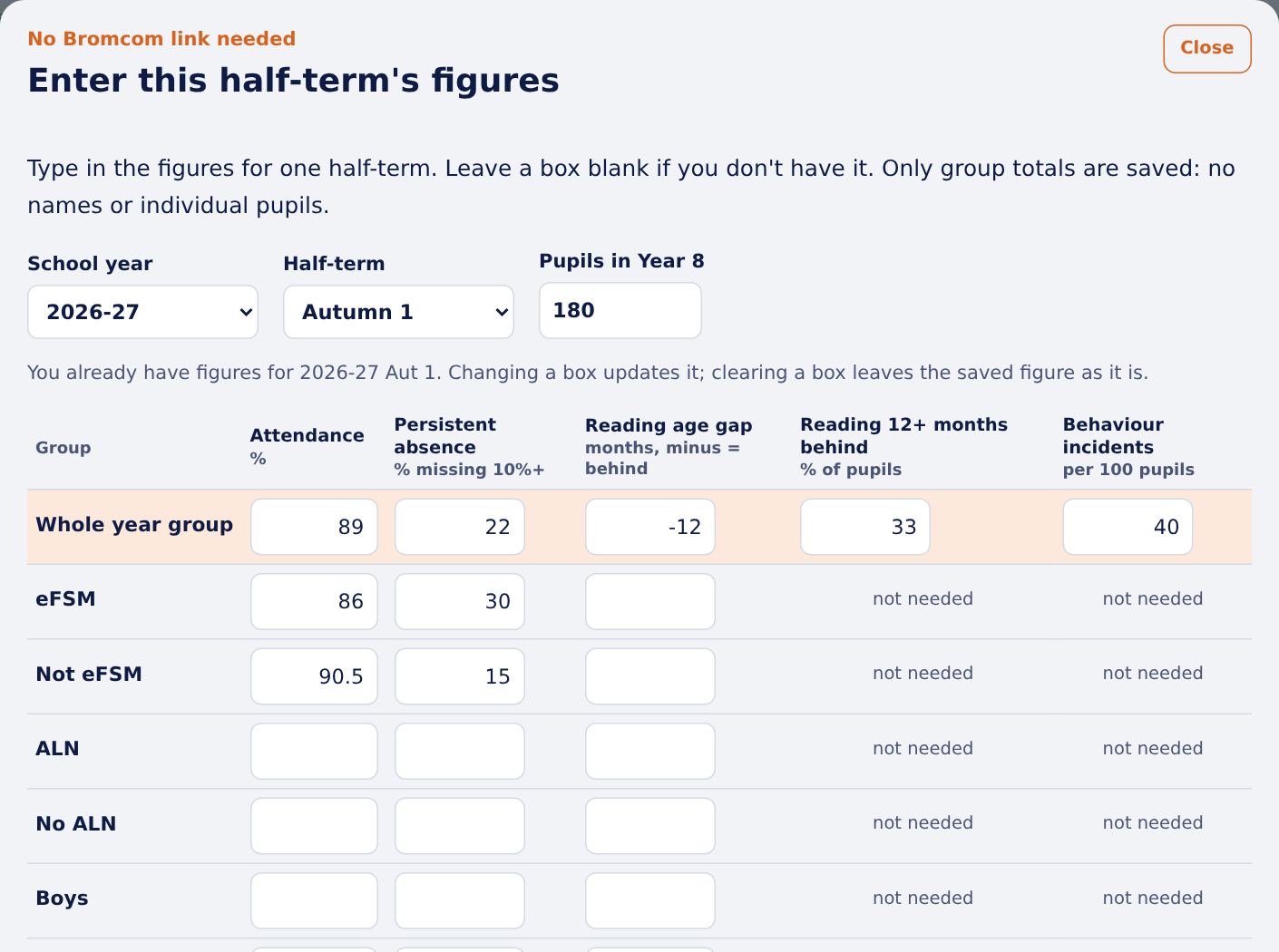 Step 1 · after each half-term
Put the figures in
Your data lead types them into one form, or uploads a report with names removed. Only group totals are kept.
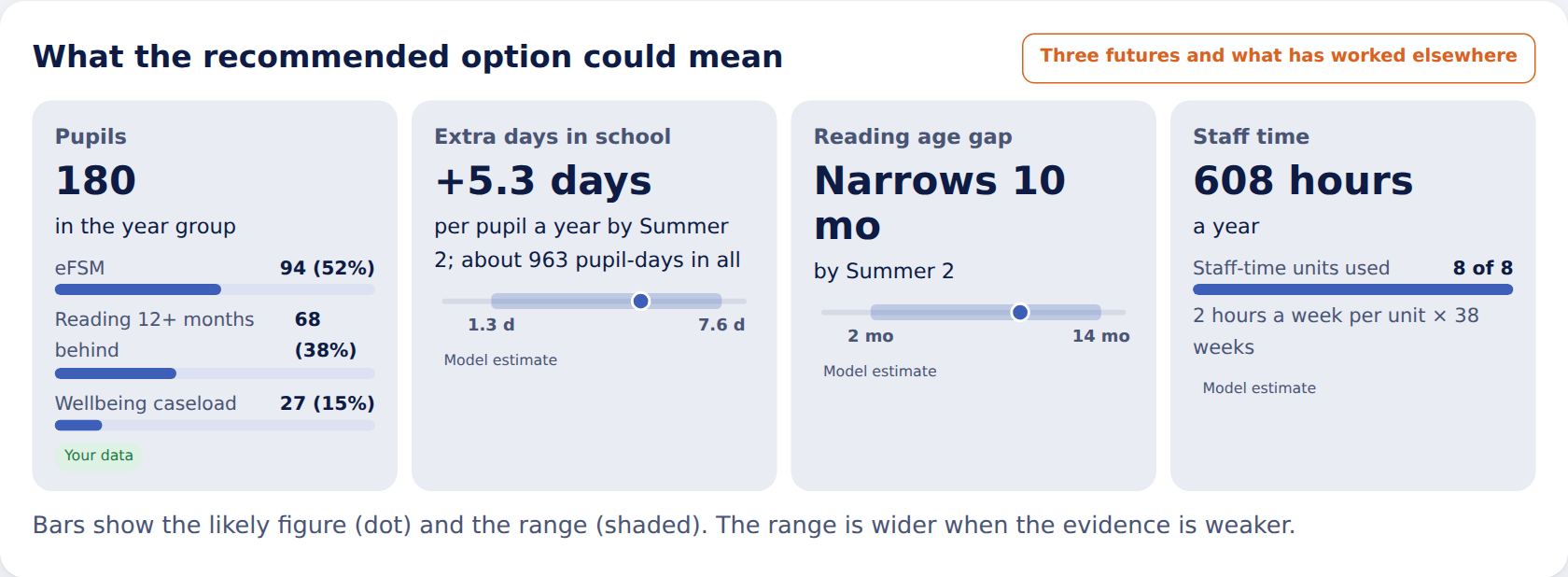 Step 2 · same day
Read one page
See what the recommended option could mean in days in school, pupils reached and staff hours, with ranges that widen when the evidence is weaker.
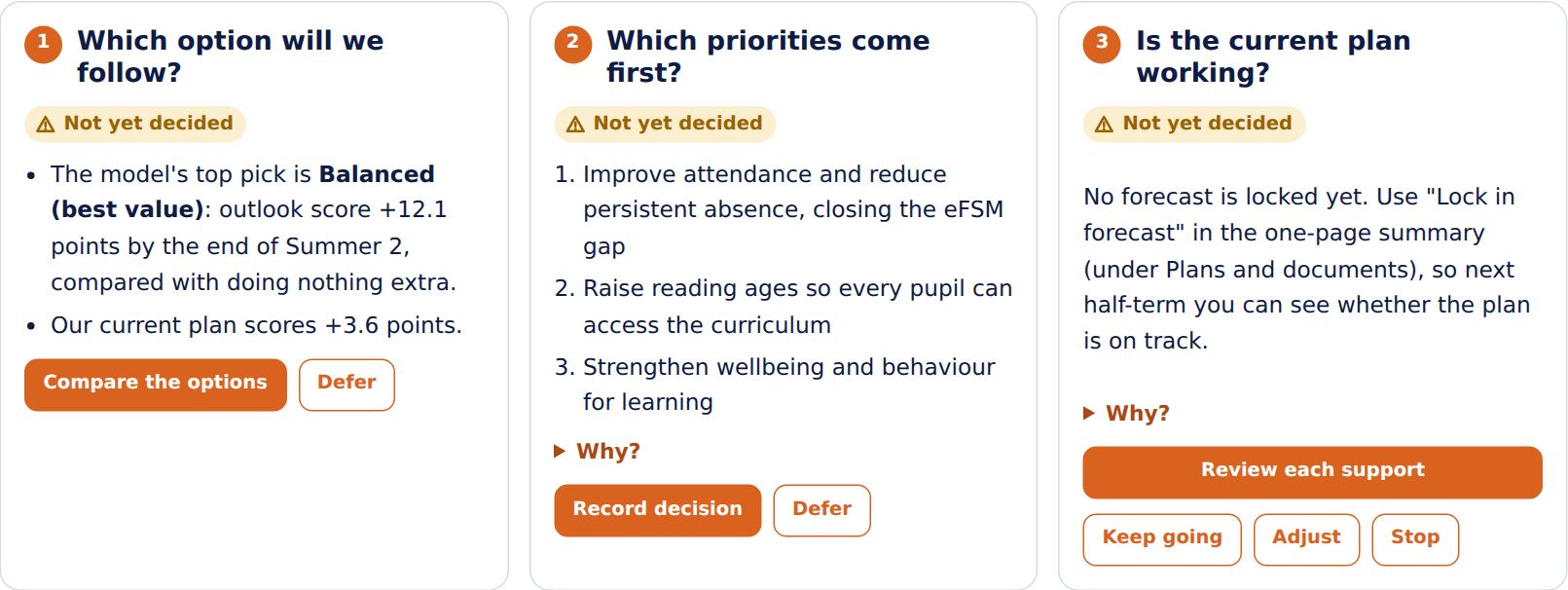 Step 3 · SLT meeting
Decide and record it
Three decisions, each with its evidence. Record what you agreed, who agreed it and when to review it.
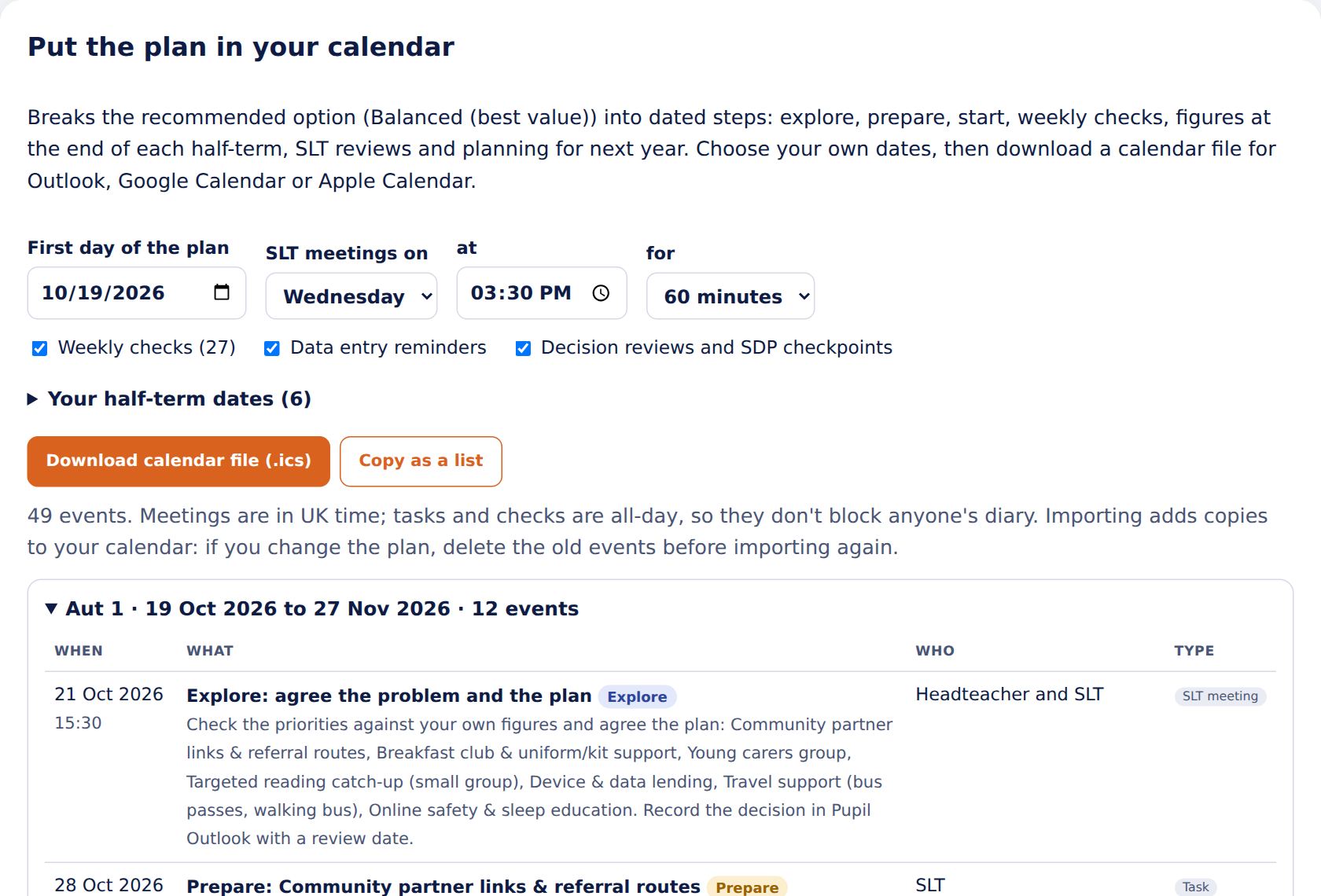 Step 4 · after the meeting
Put the plan in your calendar
The plan becomes dated steps: prepare, start, weekly checks, figures in and the next review, on your own term dates.
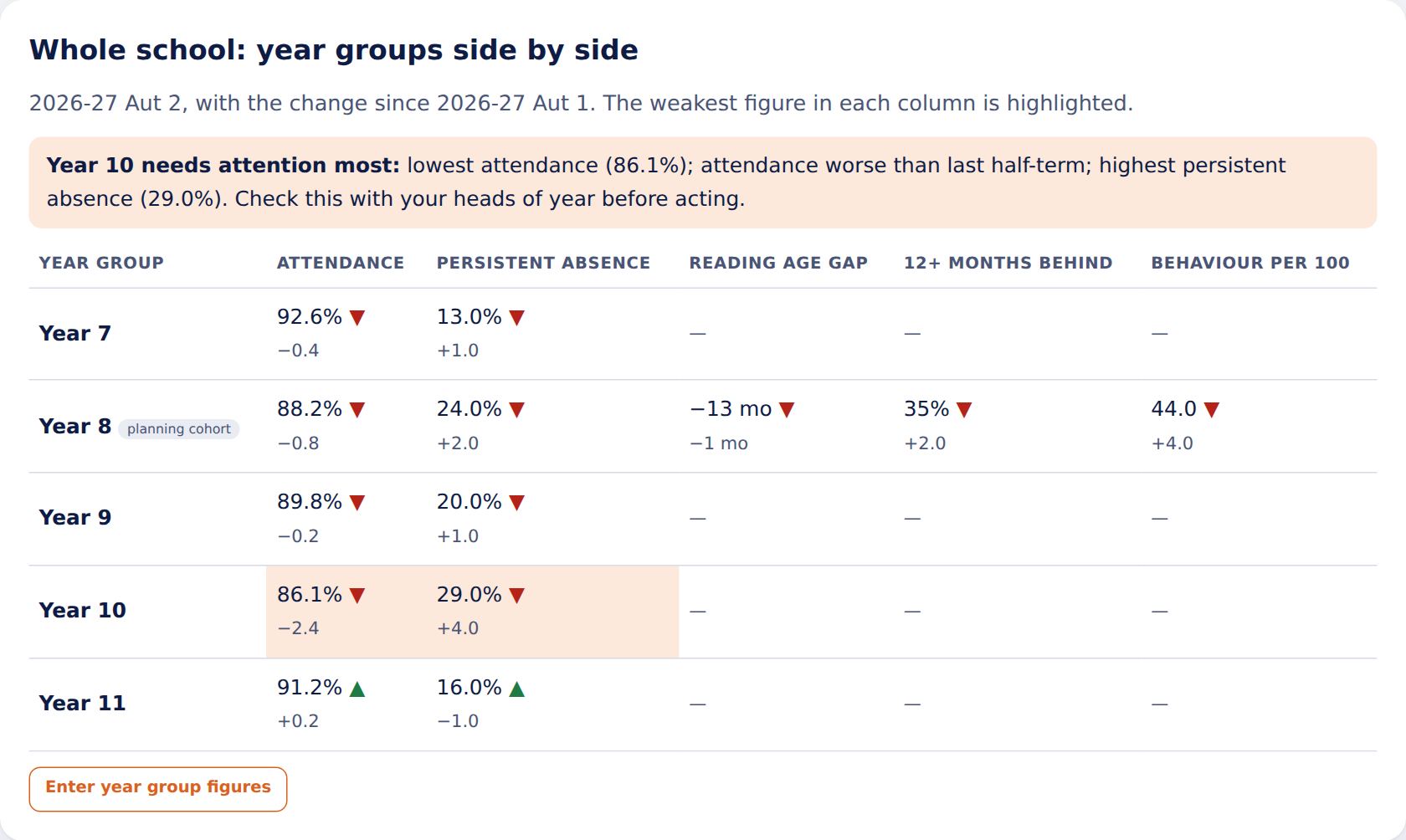 Step 5 · next half-term
See whether it worked
New figures show whether the plan is on track, and which year group needs attention most across the school.
Ready to share
What you take into the meeting
Everything downloads in formats your school already uses, ready to edit.
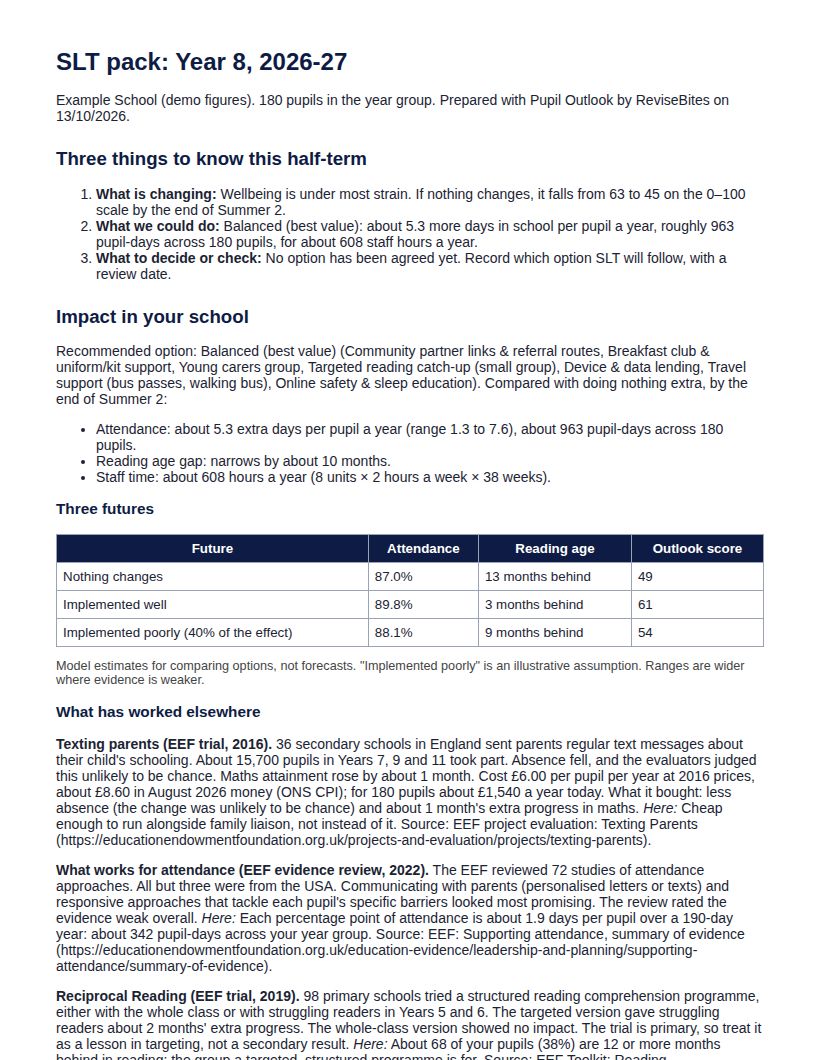
SLT pack (Word)
Three things to know, the impact of each option, the leadership summary and a school development plan draft with a logic model for each priority.
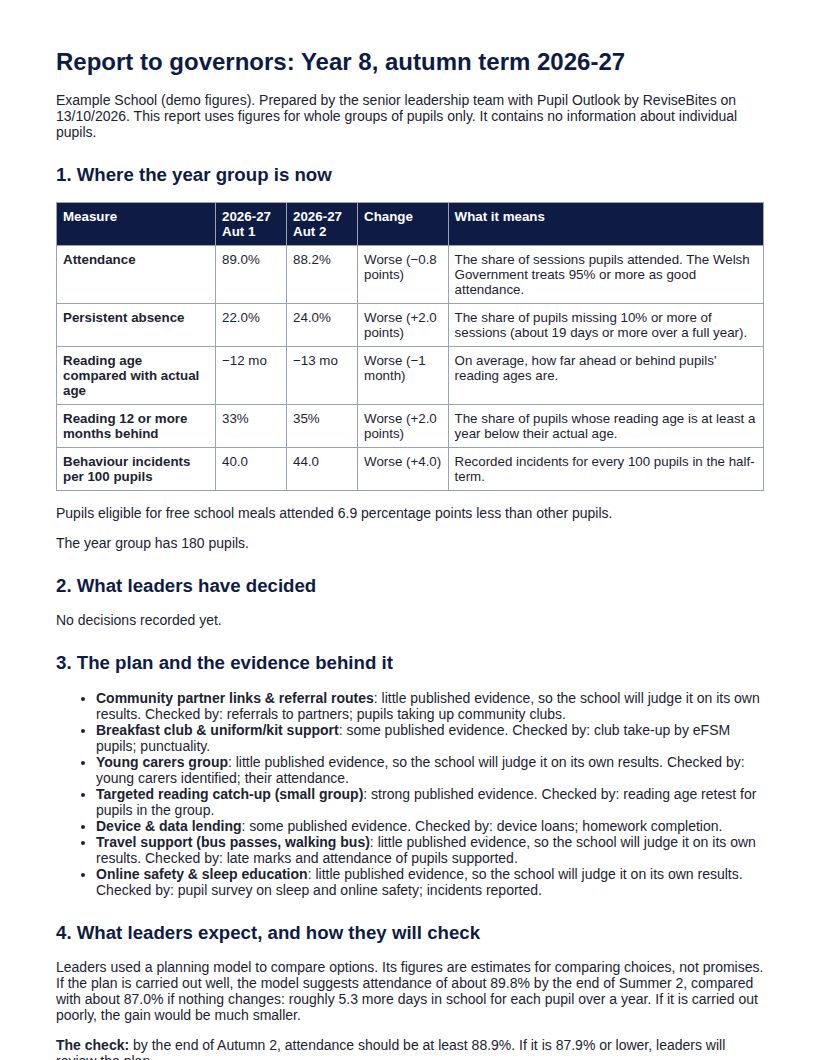
Governors' report (Word)
Plain language, with last half-term's figures, the decisions taken, how leaders will check the plan, and questions governors may want to ask.
Calendar file
The plan as dated steps for Outlook, Google Calendar or Apple Calendar, on the term dates and SLT meeting slot you choose.
Where would you like to start?
- See the decisions it supportsPriorities, staff time, PDG and more
- How it works each half‑termFour steps, built around your SLT meeting
- Primary schools and transitionYear 6 returns from your cluster primaries
- Check how data is handledGroup totals only, no pupil names
- See pricingFree for pilot schools in 2026–27
- Apply for the pilotTakes about two minutes
Who it's for
Built first for secondary senior leaders, with a simple, safe part for the primary schools that feed them.
Plan each half-term with your senior team
A one-page summary for each year group, emerging factors and scenarios, and the decisions you agree, ready for self-evaluation and your school development plan.
For secondary leaders Primary schoolsHelp your Year 6 settle into secondary school
Send your cluster secondary a Year 6 return of group totals, with no names and small groups hidden, so your pupils' next school can plan for them before September.
For primary leadersPilot places are open for 2026–27
Free for Welsh secondary and all-age schools. Applying takes about two minutes.